Stay-IN-Play Duo
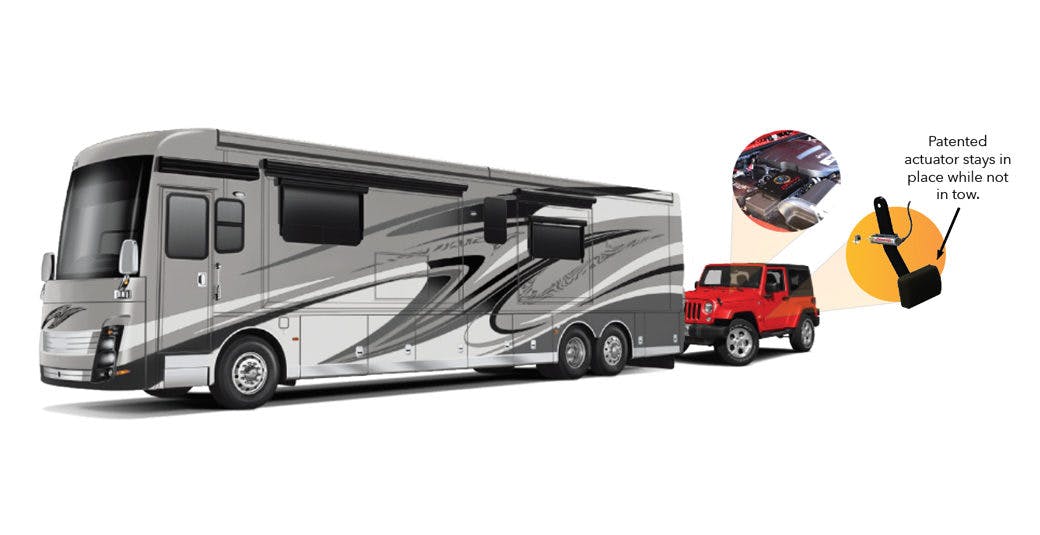
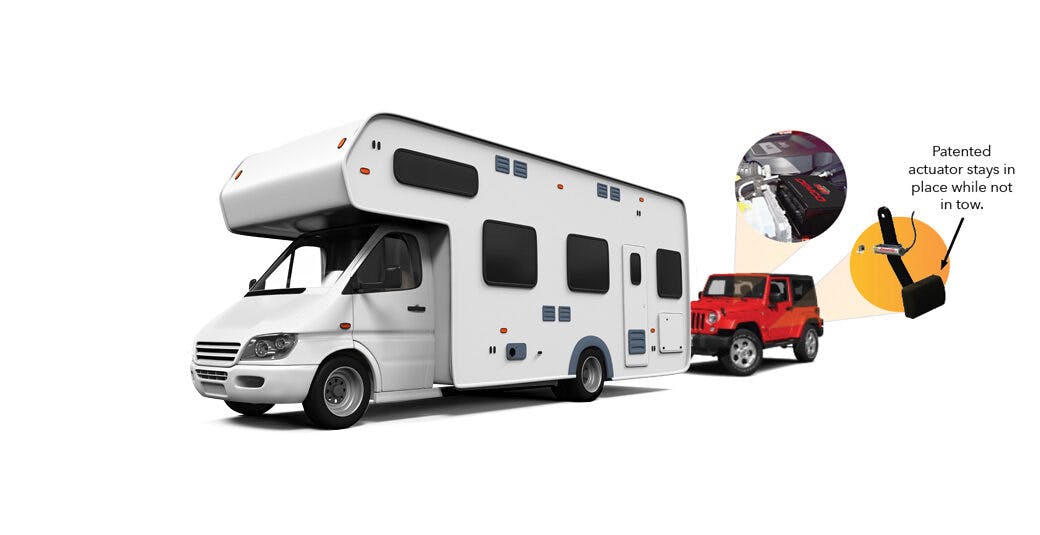
- For motorhomes with hydraulic brakes
- True proportional braking with zero setup once installed
✔️30+ Years in Chilliwack ✔️250+ Flat Tow Installs ✔️Red Seal Technicians
You spent serious money on your motorhome and your vehicle. Set up wrong, a flat tow rig will eat your transmission, snap a safety cable on the highway, or — worst case — come loose on the road.
We've installed over 250 flat tow systems out of our Chilliwack shop. We know which vehicles can be flat towed (and which can't). We know what the Provinces and US states require for supplemental braking. And we know how to walk you through hooking up your rig before you ever leave our lot.
If you're new to flat towing, we'll set you up right. If you've done it before, you'll appreciate the difference an experienced shop makes.
Towbar and baseplate are two parts of the same system, and people often use the terms interchangeably. The towbar is the arms that connect your motorhome to the vehicle. The baseplate is the bracket that bolts to the front of your toad and gives the towbar something to clip onto.
A solid foundation starts with compatibility. We supply and install brand-matched towbars and baseplates from the most trusted names in the industry. Every system is vehicle-specific and designed for seamless integration, ensuring maximum safety and ease of use.
Note: Towbar and baseplate should match by brand for proper alignment and warranty compliance. Mixed-brand setups require an adapter.
BC and most US states require auxiliary braking on the towed vehicle. If you're driving down to Arizona, Palm Springs, crossing into Mexico or staying in Canada you'll cross multiple jurisdictions — and most of them have their own rules on supplemental braking. Some states require it for any toad over a certain weight. Others require it on every toad, period. The fines for non-compliance aren't small, and the insurance issue if something goes wrong is bigger.
We install systems that meet or exceed every requirement we've seen across BC, Washington, Oregon, California, Nevada, Arizona, and any other route you choose to drive.


Why intergrated over Portable?
After 30+ years of installs, integrated braking systems beat portable units every time. They apply the toad's brakes in proportion to the motorhome. Shorter stopping distances, less stress on your RV, smother stops, and zero setup at every hookup.
Benefits of an Integrated Braking System
Stay legal and visible with our complete wiring kit:
No more arriving at your destination with a dead battery or worrying about unsafe signaling on the road.
Protect your investment from gravel, road debris, and harsh road spray. We offer multiple shielding solutions to suit your needs and preferences.
Durable, mesh-style barrier
Heavy-duty undercarriage screen
Polycarbonate-style shield
Full-width RV-mounted mud flap
Some vehicles need a little bit extra to get them operating properly:
• Battery disconnects
• Ignition bypass switches
• Wireless CoachLink brake monitors
• And more — if your vehicle or RV needs something unique, we'll find the right solution.
Every install comes with a personalized walkthrough before you leave the shop. We cover:
• Best practices for flat towing
• How to safely hook up and unhook
• How to put your specific vehicle into tow mode (every vehicle is different)
• Tips to prevent common mistakes and protect your drivetrain
You leave our lot comfortable, competent, and ready for the road — whether that's the Coquihalla or the I-5.
They're two parts of the same system. The baseplate bolts permanently to the front frame of your vehicle, it's the anchor point. The towbar is the A-frame piece that connects from the motorhome to the baseplate and folds away when you're not towing. Both are required, and they need to match by brand for proper fitment.
Not every vehicle is flat-tow capable. Most manual-transmission cars, many 4WD trucks, and Jeep Wranglers can be flat towed without modification. Most automatics, hybrids, and EVs cannot. The fastest way to know for sure is to find the recreational towing section in your vehicles owner’s manual — give us a call or stop by if you’re unsure and we can walk you through the manual as well as do some research on our end.
Most full setups (baseplate, towbar, wiring, braking system, vehicle protection) take 2 days. We'll give you a firm timeline when we book.
Yes — in BC and in most US states you'll cross driving south. Requirements vary by jurisdiction (weight thresholds, system type, etc.) but the safe answer for any cross-border RVer is: install one. We fit the Stay-IN-Play Duo (hydraulic brakes), Air Force One (air brakes) and the Patriot (Portable Option) both of which meet the toughest requirements we've seen on common routes.
It depends on your vehicle, motorhome, and which braking system you need. Setups typically range from a $4,500 CAD - $7,500 CAD installed. Call us with your year/make/model and we'll give you a real quote — no guessing.
We can install most major brands but we strongly recommend matched-brand systems (Blue Ox towbar with Blue Ox baseplate, etc.) for proper alignment and warranty compliance. If you've got an old towbar make sure you know the make and model before calling or ask about our trade-in program.
Yes, we regularly install for customers from Abbotsford, Mission, Langley, Surrey and across the Lower Mainland. Many of our flat tow customers come to us specifically because there aren't many shops in BC that do this work to our standard.
Every full flat tow install includes a hands-on walkthrough before you leave the shop — hookup, unhook, tow mode, and the common rookie mistakes. By the time you drive off, you'll be ready. (Walkthrough included free with a complete install — baseplate plus braking system at minimum. Available at shop rate for partial installs.)